 martinfabian.sk
The product has been added to cart
The product has not been added to cart
Fechtbuch Fabian + Hans Medel’s Fencing (EN)



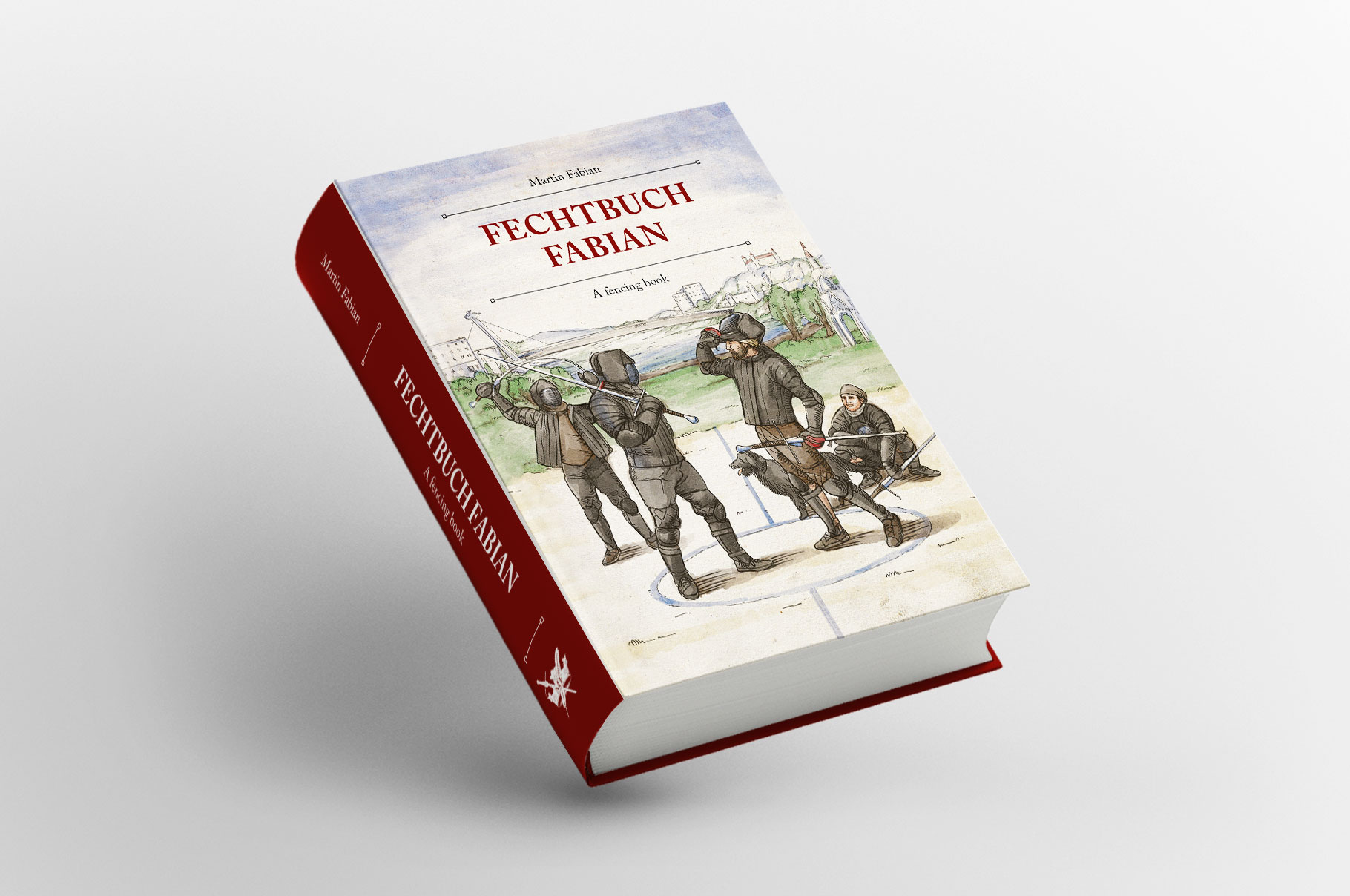







Fechtbuch Fabian + Hans Medel’s Fencing (EN)
Original price was: 110,00 €.90,00 €Current price is: 90,00 €.
excl. VAT
FF (2025, second edition, 472p) + HMF (2025, first edition, 152p.) - hardcover, full color print
In stock
| Weight | 1,54 kg |
|---|---|
| Dimensions | 26 × 16 × 6 cm |
| Format: | A5 |
| Language: | English |
| Number of pages: | 472 (FF) + 152 (HMF) |
| Cover: | Hardcover |
| Print: | Full color |
| Published: | FF: 2025 (2nd edition), HMF: 2025 (1st edition) |
| Get Fechtbuch Fabian and Hans Medel's Fencing as a bundle for a discounted price! |
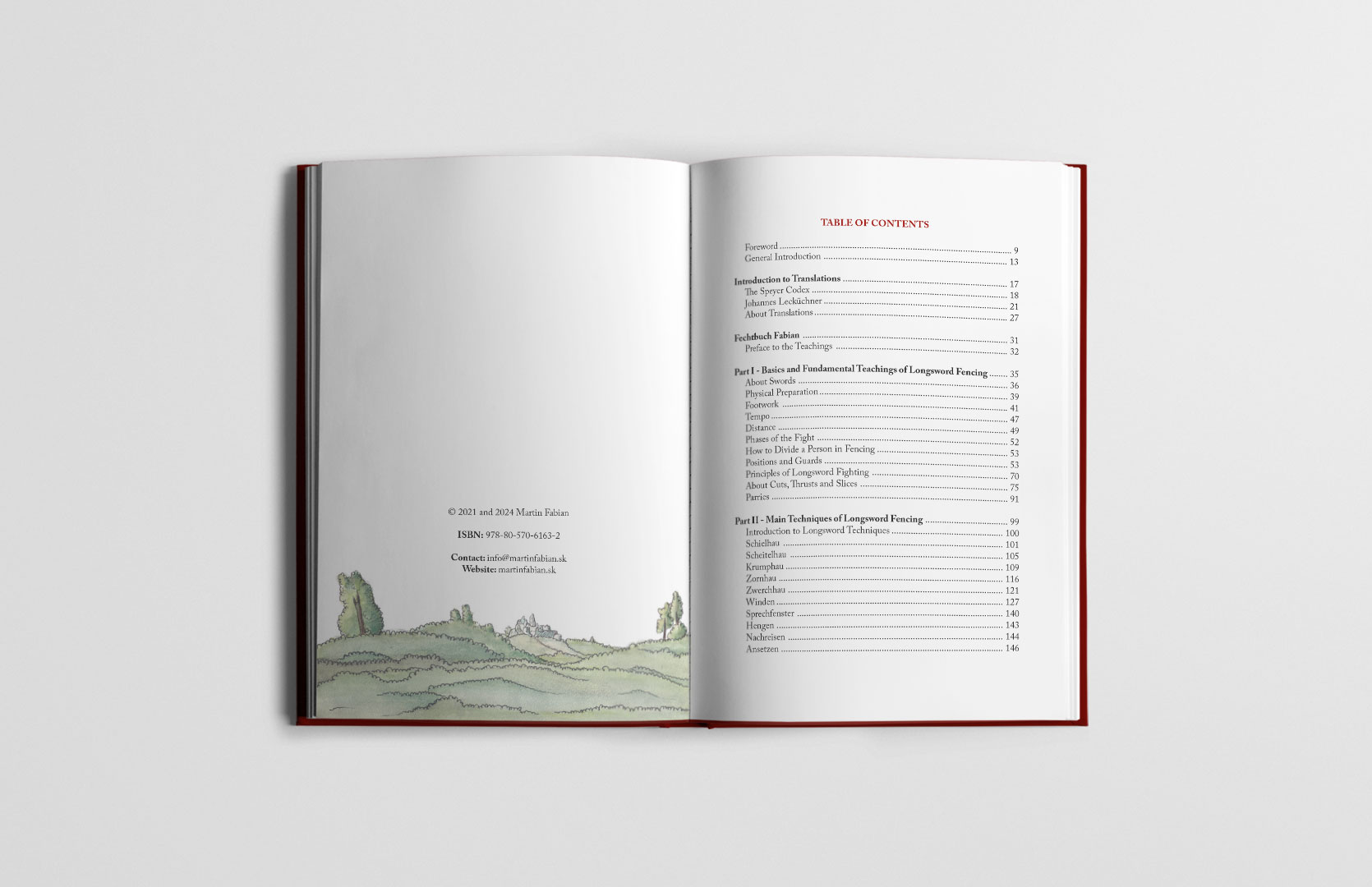
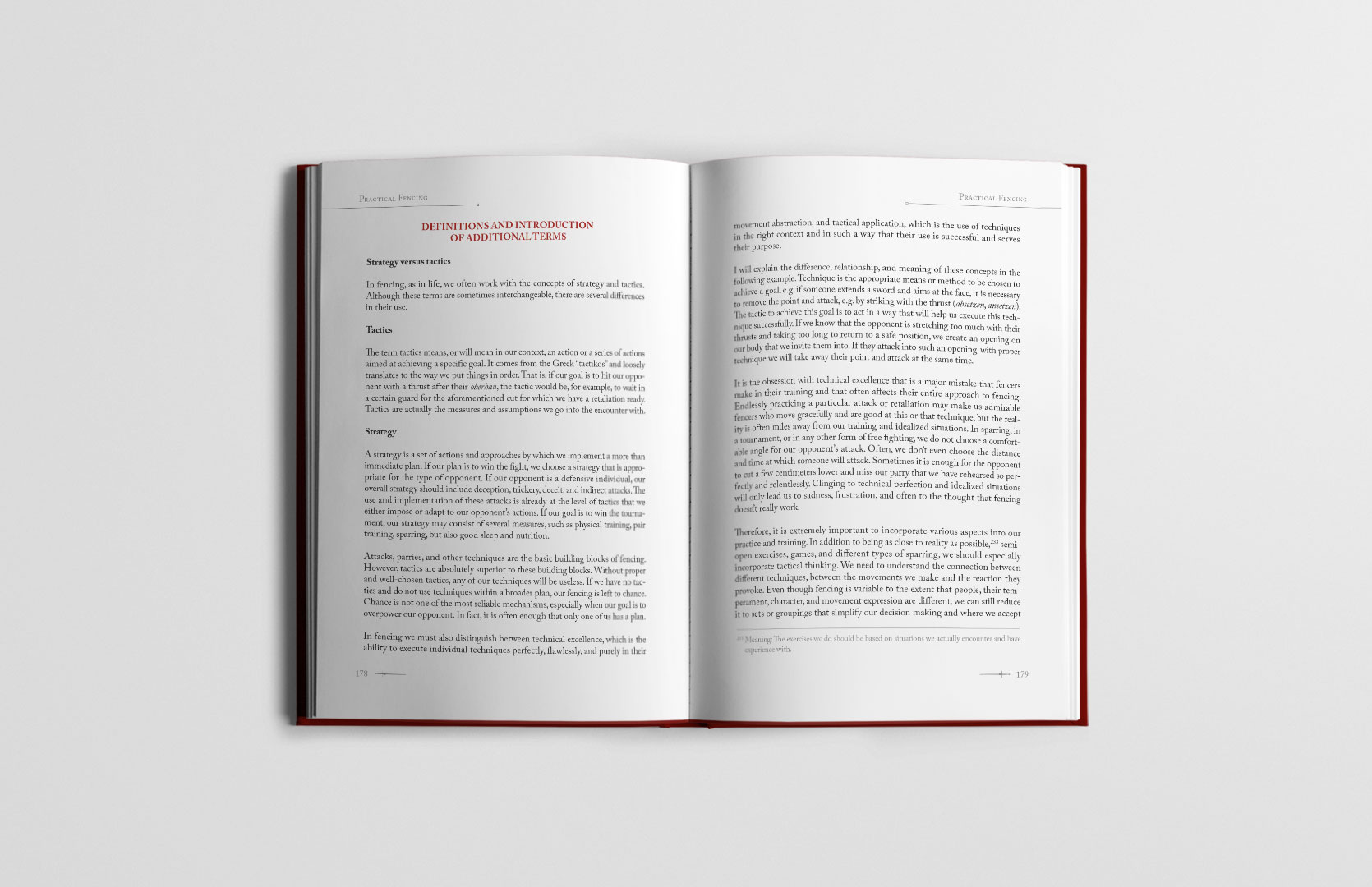
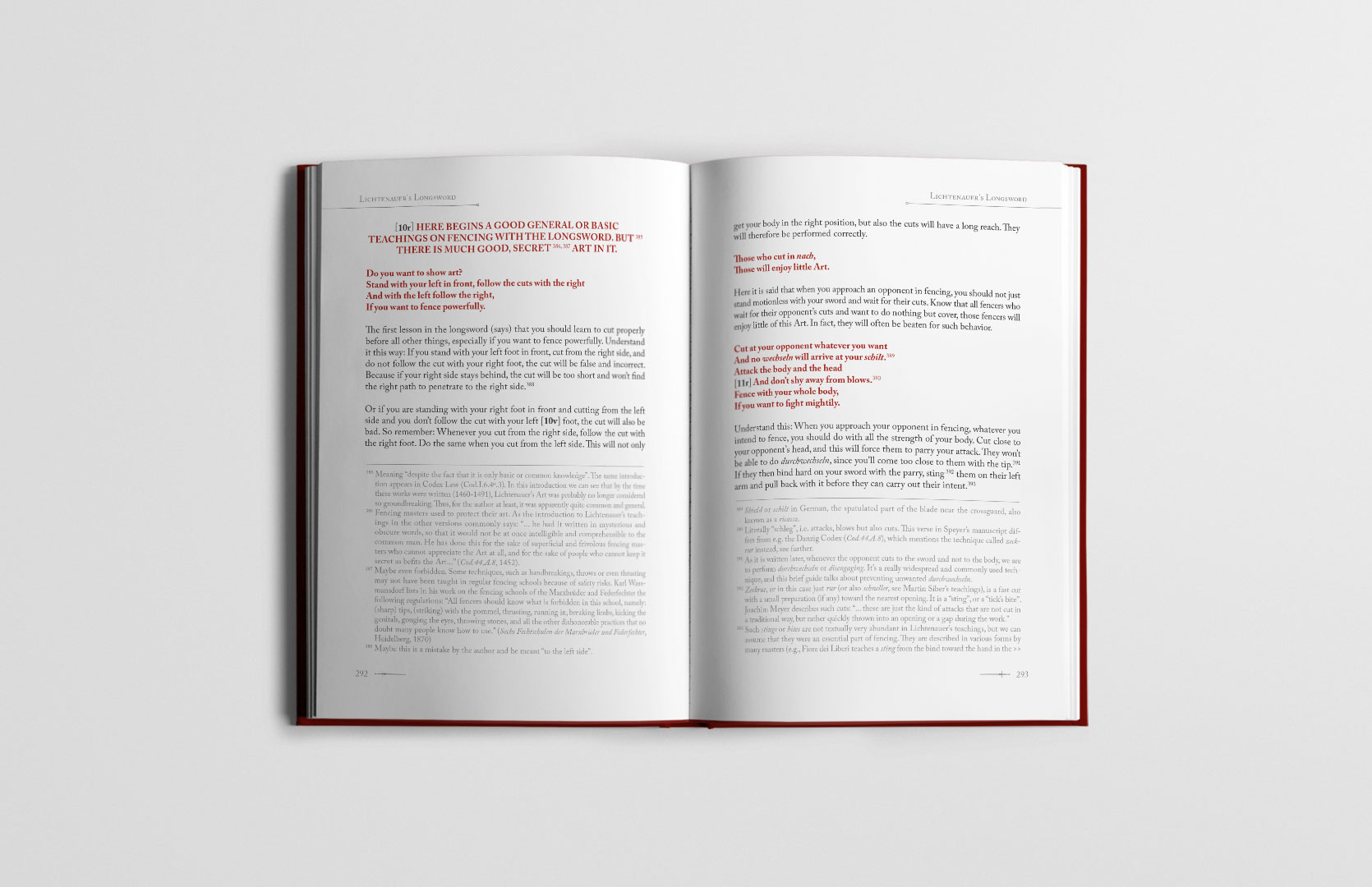
Fechtbuch Fabian (2024)A fechtbuch, or fencing book, is a specific type of German medieval literature in which fencing masters wrote down instructions on how to conduct various types of combat. Dozens of fencing books have survived, giving us an extraordinary insight into the mentality and customs not only of knights, but also of civilians who practiced fencing to prepare themselves for hard times or to strengthen their body and mind. Fechtbuch Fabian is a modern version of a medieval fechtbuch. It contains teachings that explain in modern language how to fence with the longsword, how to approach tactics, and how to perceive combat as such. You will also find complementary translations and interpretations of selected medieval teachings from the so-called Codex Speyer. It is therefore an ideal companion on the way to becoming a master fencer and successful historical European martial artist. Content
|
Hans Medel's Fencing (2025)Several dozen original fencing books and many copies have survived from the Middle Ages and the Renaissance. A large number of them deal with the legacy of the famous master Hans Lichtenauer; the authors, often anonymous, present and comment on his teachings in an almost identical way. In this book, however, we find a specific and unique interpretation of Lichtenauer's art. Hans Medel's heretical interpretation is completely his own, in a way that makes one's head spin. In the end, however, he prefers only a slightly different system and techniques (which we also find in Lichtenauer or other books). Our ideas about medieval and Renaissance fencing are not always completely accurate, and works like this, which break the norm, help us to understand the complex reality and the direction in which fencing has developed over time. The book also contains transcripts of extremely rare chronicles of fencing guilds, which are a truly unique source and witness to how fencers organized themselves in the Middle Ages and Renaissance. Content:
|
In the collection
-

Fechtbuch Fabian (EN)
Original price was: 70,00 €.65,00 €Current price is: 65,00 €. Add to cart -

Hans Medel’s Fencing (EN)
Original price was: 40,00 €.33,00 €Current price is: 33,00 €. Add to cart